Operations & Maintenance services
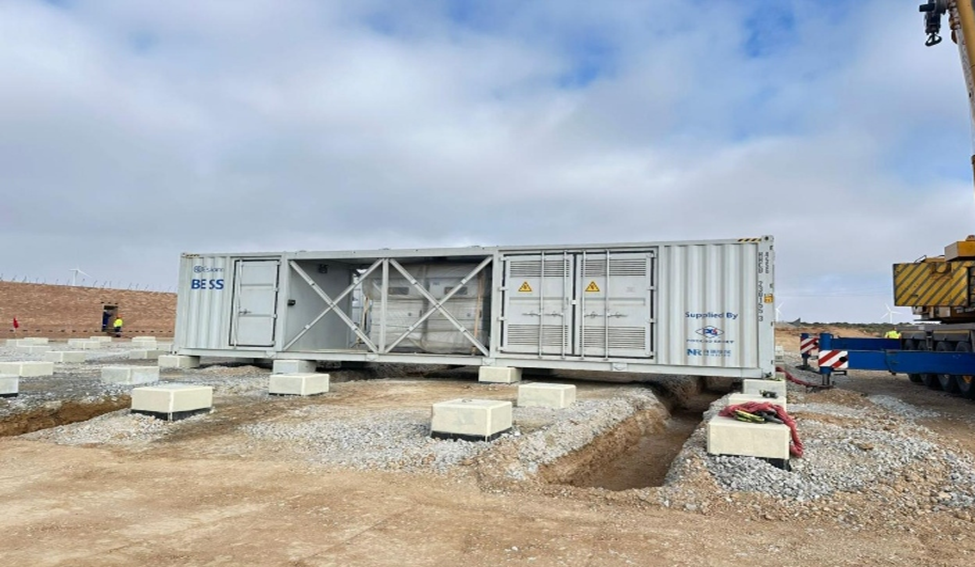
Proper operations and maintenance (O&M) of a Battery Energy Storage System (BESS) is essential to ensure optimal performance, longevity, and safety. A well-maintained BESS can maximize energy efficiency, reduce downtime, and extend battery life, ultimately improving return on investment.
1.Routine Monitoring and Performance Tracking
Continuous monitoring helps detect potential issues early, preventing unexpected failures.
Key Performance Indicators (KPIs) to Monitor:
State of Charge (SoC): Ensures batteries maintain an optimal charge level.
Depth of Discharge (DoD): Prevents excessive battery wear by keeping DoD within recommended limits.
Round-Trip Efficiency: Measures energy loss between charging and discharging.
Battery Temperature: Avoids overheating, which can degrade performance and safety.
Cell Voltage Balancing: Ensures all battery cells operate at similar voltages for uniform aging.
Best Practice: Use a monitoring solution like volytica diagnostics, Accure or Twaice for real-time performance tracking.
2. Preventive Maintenance Schedule
A structured maintenance plan prevents unexpected failures and extends battery lifespan.
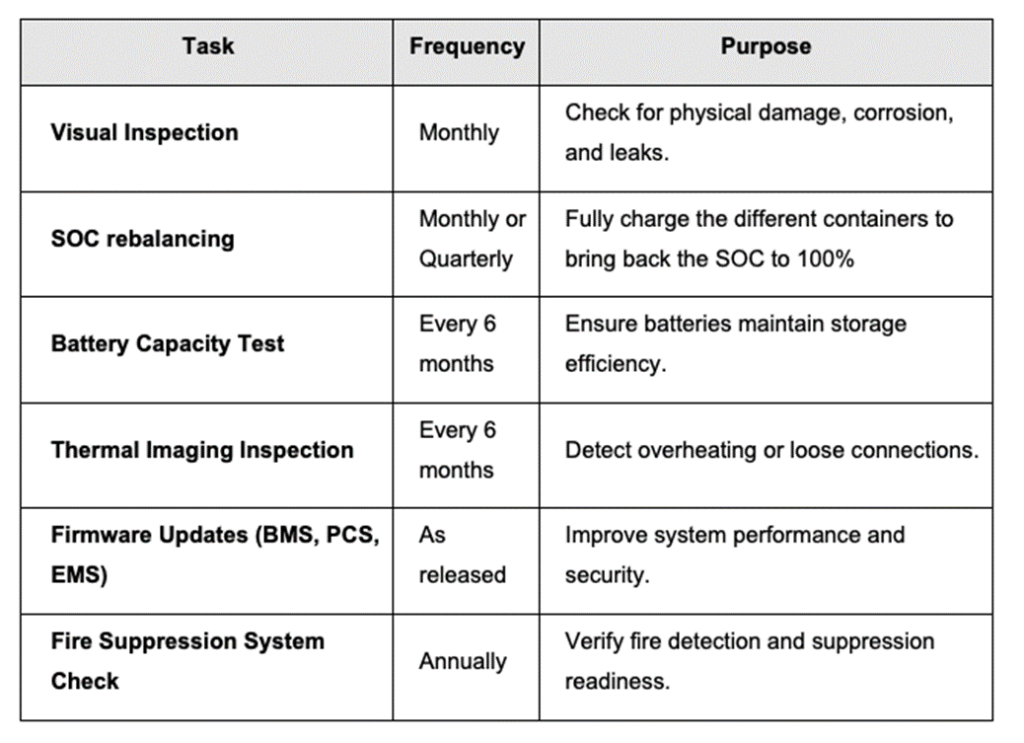
Best Practice: Follow manufacturer-recommended maintenance schedules and log all maintenance activities for future reference.
3.Troubleshooting Common BESS Issues
Identifying and resolving common BESS issues ensures continuous operation.
Common Problems & Solutions:
• Unbalanced Battery Cells
o Cause: Aging differences between cells.
o Solution: Perform BMS calibration and cell balancing.
• High Operating Temperature
o Cause: Inadequate cooling or ventilation.
o Solution: Check HVAC system and ensure airflow is unobstructed.
• Reduced Energy Storage Capacity
o Cause: Excessive cycling or aging.
o Solution: Limit Depth of Discharge (DoD) to manufacturer’s recommendation.
• Communication Failure Between Components
o Cause: Software glitches or faulty connections.
o Solution: Update firmware and inspect communication wiring.
• For any alarm, we strongly recommend contacting the manufacturer to double check if there is any specific troubleshooting process to follow.
Best Practice: Train maintenance personnel on rapid troubleshooting techniques to minimize downtime.
4.Battery Health Management
Proper battery health management ensures the BESS operates safely and efficiently.
Key Strategies:
• Maintain consistent charge/discharge cycles to avoid deep discharge damage.
• Keep batteries within optimal temperature ranges (typically 15-30°C).
• Avoid overcharging, which can cause thermal runaway.
• Use smart charging algorithms to extend battery lifespan.
Best Practice: Perform battery capacity tests every six months to assess health and detect early degradation. Our BESSential service can help.
5.Emergency Response and Safety Protocols
A well-prepared emergency response plan minimizes risks in case of system failures.
Safety Procedures:
• Fire Detection & Suppression: Ensure automatic fire suppression systems are functional.
• Emergency Shutdown Protocol: Define clear steps for shutting down the BESS in a failure scenario.• Personnel Training: Regular safety training on handling thermal runaway, electrical faults, and ventilation failures.
Best Practice: Conduct quarterly safety drills and ensure fire department coordination for rapid response.
6.Long-Term System Optimization
BESS performance optimization strategies ensure maximum efficiency and cost savings.
Optimization Techniques:
• Peak Load Shifting: Charge batteries during low-cost hours and discharge during peak demand.
• Grid Services Participation: Leverage frequency regulation and demand response programs for additional revenue.
• Predictive Analytics: Use AI-based analytics to forecast performance trends and preemptively address issues.
Best Practice: Regularly update operating strategies to align with energy market trends and regulatory changes.
Conclusion
Effective BESS operations and maintenance enhance system longevity, efficiency, and reliability. By implementing routine monitoring, preventive maintenance, troubleshooting procedures, safety protocols, and optimization strategies, asset owners can ensure long-term performance and profitability.
Wind Turbine Repairs and Maintenance

Wind Turbine Repairs and Maintenance
-Repair slip rings
-Repair brush holders and brush gear assemblies
-Re-insulate end shield bearing housings
-Measure slip ring profiles, provide reports & general inspection condition of the brush side of the machine.
-Field services
-Online testing condition monitoring of generator
-Rewinding of generator & electric motors
-Gearboxes
-Winch pitch motors
-Shaft damage & balancing
-Core & winding analyser
Tooling: New and Rental
-Hydraulic torque wrenches
-Pneumatic torque wrenches
-Hand torque wrenches
-Hydraulic jacks & cylinders
-Hydraulic electric & pneumatic pumps
-Hydraulic bolt tensioners
-Hydraulic & pneumatic tensioning pumps
New Equipment Supply
-Carbon Brushes
-Brush Holders
-Slip Ring Assemblies
-Brush Gear Assemblies
-Generator Shaft Grounding
-Electrical Motors
-Generators
-Gearboxes
Battery Energy Storage Systems and Their Importance in Africa
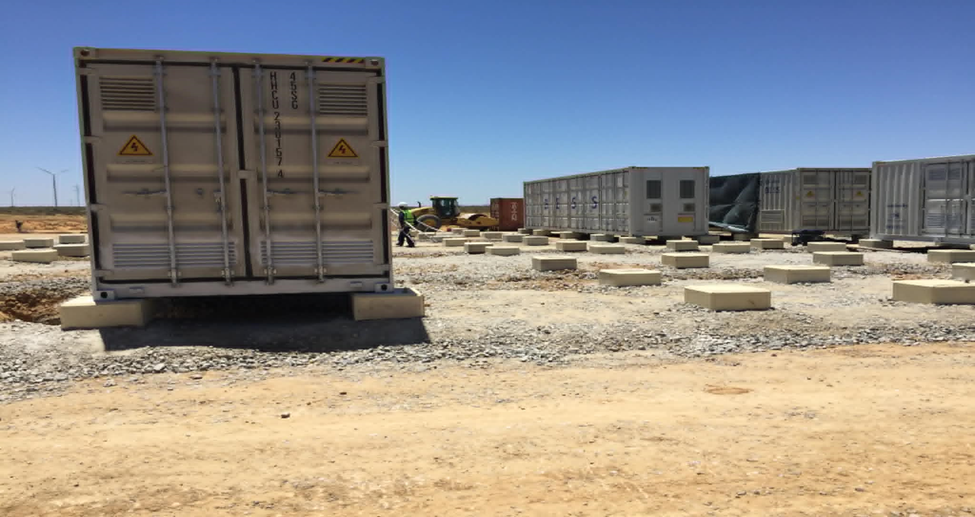
As Africa continues to embrace renewable energy, finding efficient ways to store energy has become crucial. One of the most promising solutions to this challenge is the Battery Energy Storage System (BESS).
What is BESS?
A Battery Energy Storage System (BESS) is a technology that stores energy generated from various sources, such as solar or wind power, in large-scale battery systems. The stored energy can then be released when needed, ensuring a steady supply of electricity, even when renewable sources like the sun or wind are not available.
Think of BESS like a giant rechargeable battery. During the day, when solar energy production is at its peak, any excess energy generated that isn’t used immediately can be stored. Later, when the sun sets or during periods of high electricity demand, that stored energy is released, making it available for homes, businesses, and industries.
Why is BESS Important for Africa?
Africa is heavily reliant on an ageing energy infrastructure, with much of the power coming from coal-fired plants. These plants are not only environmentally harmful but also inefficient in meeting the growing electricity demand. Frequent power outages (load shedding) have made the need for alternative energy solutions even more urgent.
This is where BESS becomes a game-changer for several reasons:
-Improving Grid Stability
Africa’s electricity grid faces significant challenges in balancing supply and demand. By storing energy and discharging it when required, BESS helps stabilise the grid, reducing the risk of power outages.
-Maximising Renewable Energy
While solar and wind power are abundant, they are not constant sources of energy. Solar power, for instance, is only generated during the day. BESS allows us to store excess renewable energy and use it when natural conditions are not favourable, making renewable energy more reliable.
-Reducing Dependence on Fossil Fuels
One of Africa’s key goals is to reduce its reliance on coal-fired power stations. BESS supports this transition by making renewable energy sources more efficient and dependable, ultimately leading to a greener and more sustainable future.
-Cost Savings
Energy prices are highly volatile in Africa, especially during peak hours. BESS allows businesses and households to store energy when it’s cheaper and use it during times when electricity prices are higher, leading to significant cost savings.
How DBC Contractors is Bridging the Gap with BESS
At DBC Contractors, we understand the vital role that BESS plays in the energy landscape. We are expertise in battery storage systems, we are committed to ensuring that Africa’s transition to renewable energy is both seamless and effective.
1.Expertise in Battery Storage Solutions
DBC Contractors has been at the forefront of renewable energy development, and our expertise in battery storage means that we can provide custom solutions to suit the needs of businesses, municipalities, and industries across Africa.
2.Large-Scale Energy Projects
We specialise in large-scale projects that integrate solar energy generation with BESS. This combination ensures that renewable energy is not only generated but also stored efficiently, making it available when needed.
3.Reducing Load Shedding
Our battery storage solutions can help reduce the impact of load shedding by providing backup power when the grid is under strain. This is particularly beneficial for businesses and industries that cannot afford downtime.
4.Supporting Municipal Grids
Many municipalities in Africa are exploring ways to supplement their electricity supply with renewable energy. BESS solutions can provide a reliable source of power that supports local grids, enhancing energy independence and reducing strain on National Electricity.
5.Sustainable Energy for Businesses
By integrating solar and battery storage systems, businesses can drastically reduce their carbon footprint while ensuring a reliable and cost-effective energy supply. This not only supports Africa’s green energy goals but also makes economic sense for companies seeking energy independence.
The Future of Energy Storage in Africa
Battery energy storage is no longer just a future concept; it is rapidly becoming an integral part of Africa’s energy landscape. As the country seeks to overcome its energy challenges, BESS will play a critical role in ensuring a reliable, sustainable, and cost-effective power supply for all.
Our cutting-edge BESS solutions are designed to make renewable energy more reliable and accessible for everyone. Whether you’re a business, municipality, or industry leader, we are here to help you harness the power of BESS and unlock the potential of clean energy. See less